Describe How Plasmids Are Used in Genetic Engineering
Each bacterial cell typically produces many copies of a plasmid in contrast to making only one copy of its own chromosome. Purification of plasmid DNA.

Plasmids Essential Tools For Genetic Engineering E Zyvec
DNA cloning is the process of making multiple identical copies of a particular piece of DNA.

. Genetic engineering also called genetic modification is a process that uses laboratory-based technologies to alter the DNA makeup of an organism. Decades after their first use plasmids are still crucial laboratory tools in biotechnology. They are copied independently.
Plasmids are used in genetic engineering to transfer foreign genetic material into different types of cells. LEARNING OBJECTIVES Illustrate how plasmids can be used as cloning vectors Key Takeaways Key Points All engineered vectors have an origin of replication a multi- cloning site and a selectable marker. Plasmids are extremely valuable tools in the fields of molecular biology and genetics specifically in the area of genetic engineering qv.
Bacterial cells are made to take up the genetically modified plasmids. A plasmid also called a vector in this context is a small circular DNA molecule that replicates independently of the chromosomal DNA in bacteria. For example genetic engineering may involve adding a gene from one.
Modified plasmids are usually reintroduced into a bacterial host for replication. Researchers return the plasmid to the bacteria and. Scientists build the human insulin gene in the laboratory.
Viruses invade cells by first inserting their genetic material. Plasmid Vector The ease with which plasmids can be modified and replicated makes it a great tool in genetic engineering and. This may involve changing a single base pair A-T or C-G deleting a region of DNA or adding a new segment of DNA.
Up to 24 cash back It is generally used for altering different microorganisms like bacteria. Three plasmid vectors have been created using either the glucoamylase A amyA pyruvate decarboxylase pdcA or phosphoglycerate kinase pgk1 promoters to drive expression of heterologous proteins. The foreign DNA fragment is inserted into the plasmid and the recombinant DNA molecule is transformed into the recipient cell.
Overview of DNA cloning. In recombinant DNA technology plasmids are often used as vectors DNA molecules that carry DNA fragments from one organism to another. How are Plasmids Used in Genetic Engineering PCR amplification of the target DNA sequence Digestion of DNA fragments and plasmids by the same restriction enzyme Ligation of plasmids and the foreign DNA fragments producing recombinant DNA molecules.
These enzymes cut the DNA to. In such procedures a plasmid is cut at a specific site or sites using enzymes called restriction. Transformation of the recombinant DNA molecules.
They play a critical role in such procedures as gene cloning recombinant protein production eg of human insulin and gene therapy research. This recombinant micro-organism could now produce the protein encoded by the human gene. Genetic engineering Bacteria exchange DNA using plasmids.
A standard phenol-chloroform method can be used for the isolation and purification of the. The plasmid acts as a vector - it is used to transfer DNA from one organism to another. Artificially constructed plasmids may be used as vectors in genetic engineering.
Plasmids are used as cloning vectors in genetic engineering because they can replicate independently and can transfer the desired gene to the host cell. In this work we describe a set of plasmid-based expression vectors that can be used for the production of heterologous proteins in R. In this method a small ring of DNA called a plasmid which is normally found in bacteria is placed in a container with special restriction enzymes.
These plasmids serve as important tools in genetics and biotechnology labs where they are commonly used to clone and amplify make many copies of or express particular genes. Plasmids can be used as cloning vectors allowing the insertion of exogenous DNA into a bacterial target. Genetic engineering is the transfer of DNA between organisms using.
The fact that plasmids are smaller and in greater number than the host chromosome make plasmids easier to isolate in pure form which is why researchers. Scientists have taken advantage of plasmids to use them as tools to clone transfer and manipulate genes. Plasmids can be copied numerous times regardless of.
Description This animation describes a genetic engineering technique called DNA cloning which can be used to make bacteria express a foreign gene typically from another species. Students construct paper recombinant plasmids to simulate the methods genetic engineers use to create modified bacteria. Then they remove a loop of bacterial DNA known as a plasmid and insert the human insulin gene into the plasmid.
Plasmids that are used experimentally for these purposes are. They learn what role enzymes DNA and genes play in the modification of organisms. Plasmid DNA and recombinant DNA technology.
During DNA cloning a new gene is inserted into a. The transformed cells are selected by the antibiotic resistance of the used plasmid. Scientists can force bacteria to keep them.
In a typical DNA cloning procedure the gene or other DNA fragment of interest perhaps a gene for a medically important human protein is first inserted into a circular piece of DNA called a plasmid. Isolating the pure form of the plasmid DNA is one of the crucial steps in molecular cloning. A wide variety of plasmids are commercially available for such uses.
In cloning the plasmid molecules can be used to provide a vehicle in which to insert a desired DNA fragment. Plasmid is a double stranded circular extra chromosomal DNA of bacterium. Virtually all plasmids that are used to deliver DNA contain genes for.
These small circles containing the cloned DNA are called plasmids. It is used in recombinant DNA experiments to clone genes from other organisms and make large quantities of their DNA. Plasmid can be transferred between same species or between different species.
Size of plasmids range from 1-1000 kilo base pairs. For genetic engineering purposes plasmids are artificially prepared in the lab The lab-grown plasmids which are used as a vector contain an origin of replication cloning. Plasmids used as vectors can be genetically engineered by researchers and scientific supply companies to have specialized properties as illustrated by the commonly used plasmid vector pUC19 Figure 134.
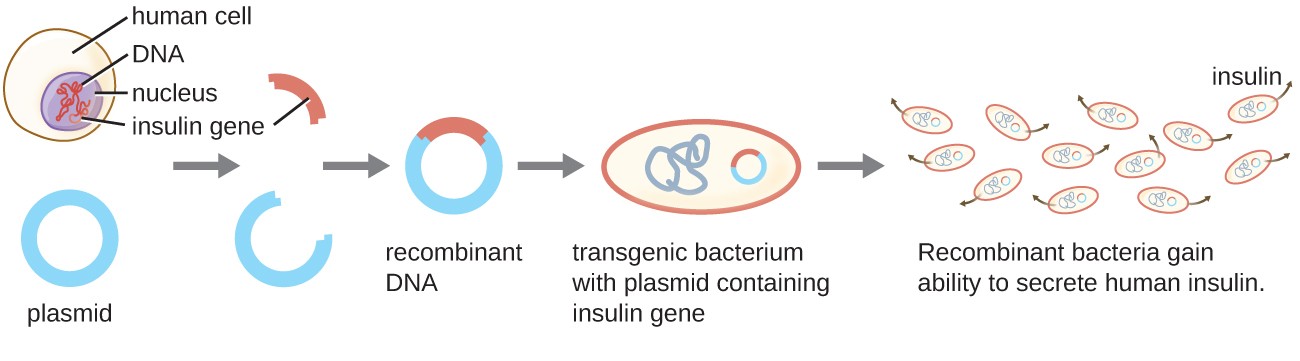
Microbes And The Tools Of Genetic Engineering Microbiology
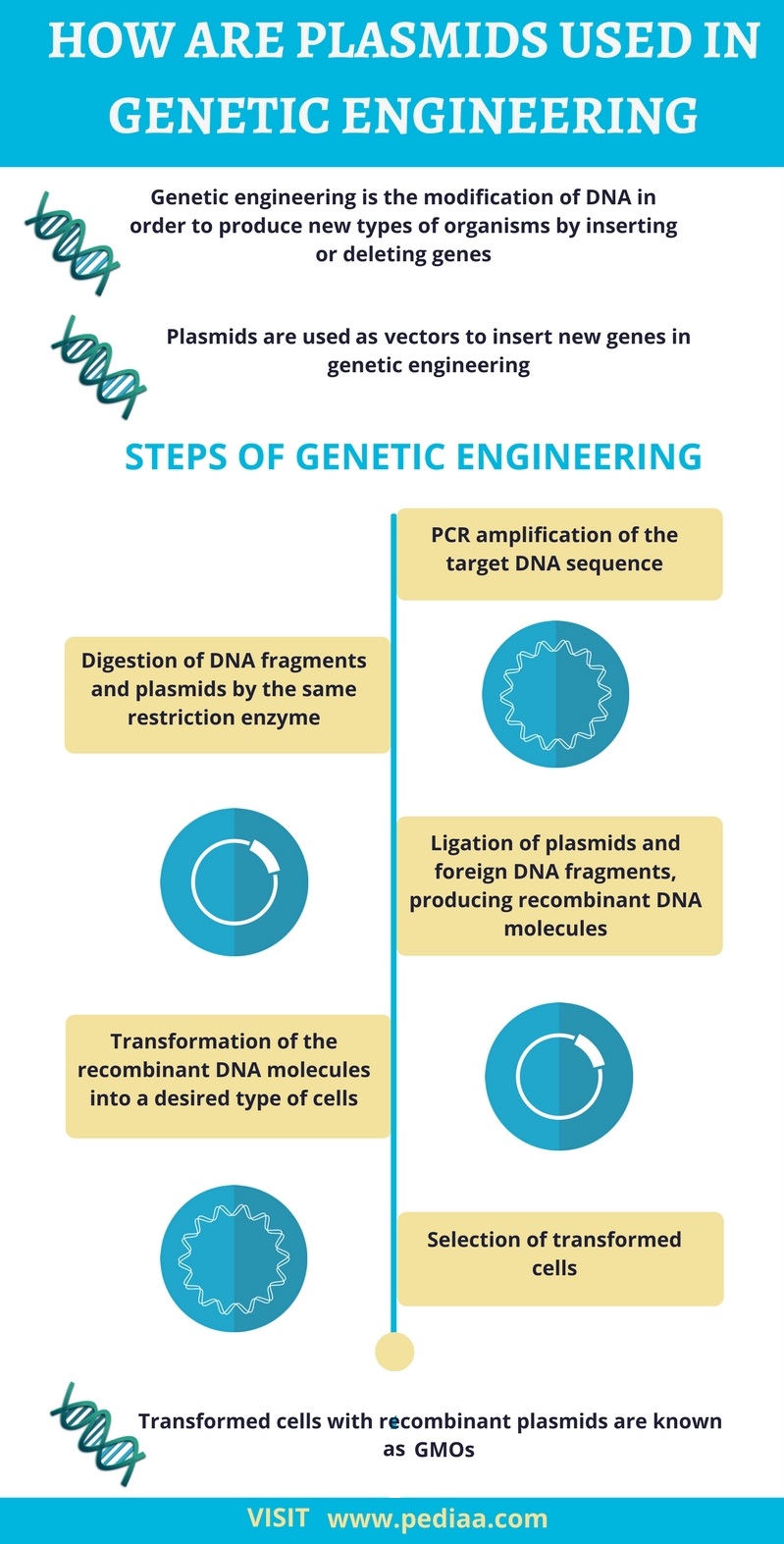
How Are Plasmids Used In Genetic Engineering Pediaa Com
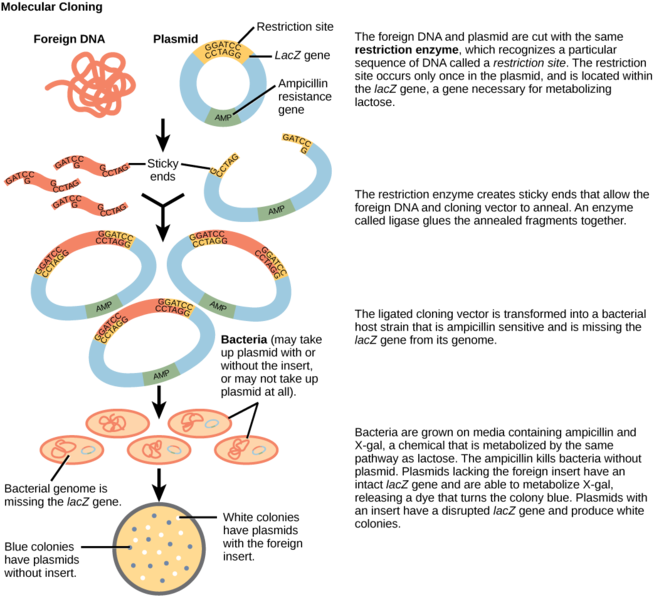
How Are Plasmids Used In Genetic Engineering Pediaa Com
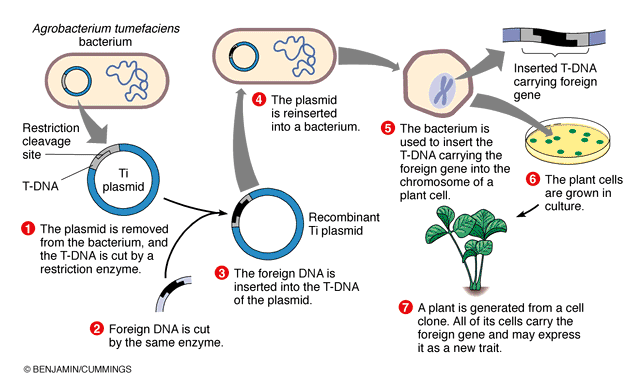
How Are Organisms Genetically Modified


Comments
Post a Comment